Nutrition · · 7 min read
Updated
27 Best High-Protein Foods for Weight Loss
Compare protein-rich animal and plant foods, and learn why serving size and preparation affect their protein content.
MyDietingApp Editorial · Not medically reviewed
Quick answer
Foods high in protein include meat, fish, eggs, dairy, legumes, and other plant foods. Protein can be part of a balanced eating pattern, but no single food causes weight loss and serving amounts vary.
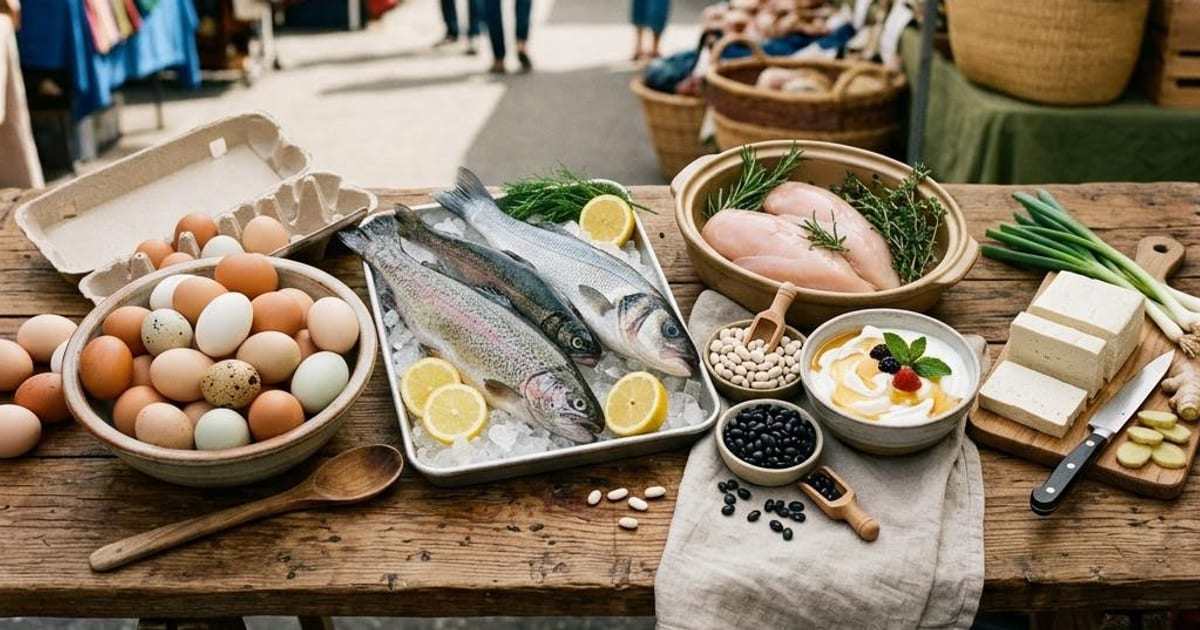
The useful comparison is how much protein a real serving provides, alongside the other nutrients and preferences that shape a person's eating pattern.
Which lean meats and poultry provide protein?
- Chicken breast — ~31g protein per 100g, very low fat
- Turkey breast — ~29g, lean and versatile
- Lean ground beef (93/7) — ~26g, rich in iron and B12
- Pork tenderloin — ~26g, surprisingly lean
- Bison — ~28g, leaner than beef
Fish & seafood
- Tuna — ~30g, extremely lean and cheap (canned)
- Salmon — ~25g, plus omega-3 fats
- Cod — ~23g, very low calorie
- Shrimp — ~24g, almost zero fat
- Sardines — ~25g, loaded with omega-3 and calcium
Eggs & dairy
- Eggs — ~6g each, the gold standard for protein quality
- Egg whites — ~4g each, pure protein, zero fat
- Greek yogurt (plain, nonfat) — ~10g per 100g
- Cottage cheese — ~11g per 100g, great before bed
- Skyr / quark — ~11g per 100g, thick and filling
Which plant-based foods provide protein?
- Tofu — ~8g per 100g, absorbs any flavor
- Tempeh — ~19g per 100g, fermented and firm
- Edamame — ~11g per 100g, high fiber too
- Lentils — ~9g per 100g cooked, plus fiber
- Chickpeas — ~9g per 100g cooked
- Black beans — ~9g per 100g cooked
- Seitan — ~25g per 100g, the highest-protein plant option
Snacks & extras
- Whey or plant protein powder — ~24g per scoop, fast and easy
- Beef jerky — ~9g per ounce, portable
- Roasted edamame / chickpeas — crunchy protein snack
- Tuna packets — ~17g, no prep needed
- Protein bars (low sugar) — ~15–20g on the go
How much protein might you need for your circumstances?
Protein requirements vary with age, health, and activity. The adult Recommended Dietary Allowance is 0.8 grams per kilogram of body weight per day, but an individual's needs may differ; people with kidney disease or other medical conditions should seek tailored advice. Evidence does not establish one optimal per-meal target for everyone. (National Academies Dietary Reference Intakes)
The bottom line
Include protein sources that fit your preferences and needs. Protein is one part of an overall nutrition pattern—not a weight-loss "cheat code"—and individual targets are best discussed with a qualified professional when health conditions are involved.
MyDietingApp tracks your protein automatically as you log meals and shows a live progress bar toward your daily target — so you always know if you need one more protein-rich meal.
Sources and further reading
Put this guide to use
MyDietingApp's free food log lets you record meals and their nutrition when available; it does not determine a personalized protein prescription.